Wednesday, December 13, 2006

And the Winner Is: Coolest Writer: Danuta Borchardt

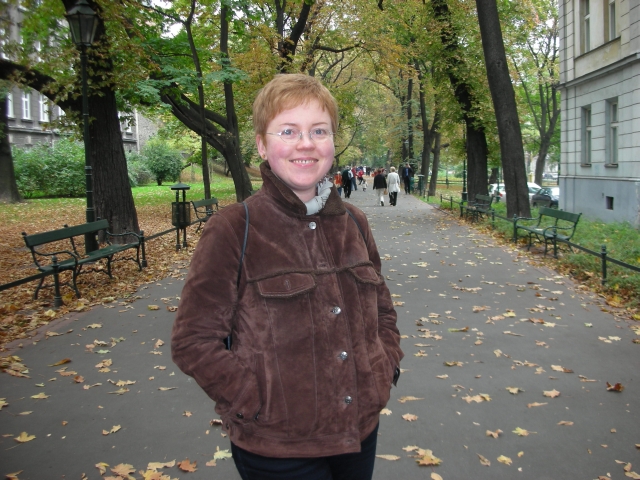
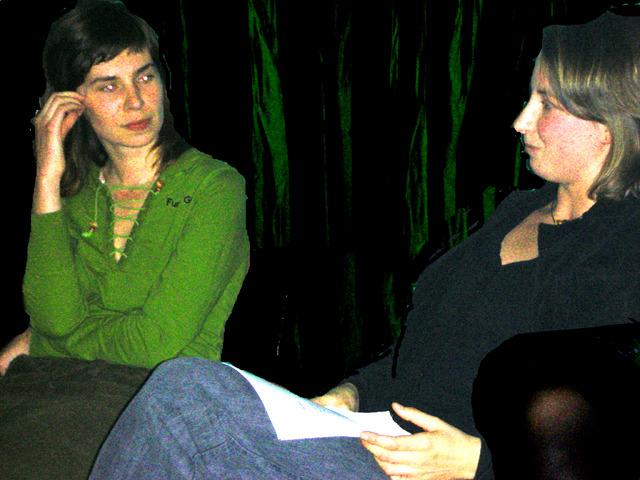
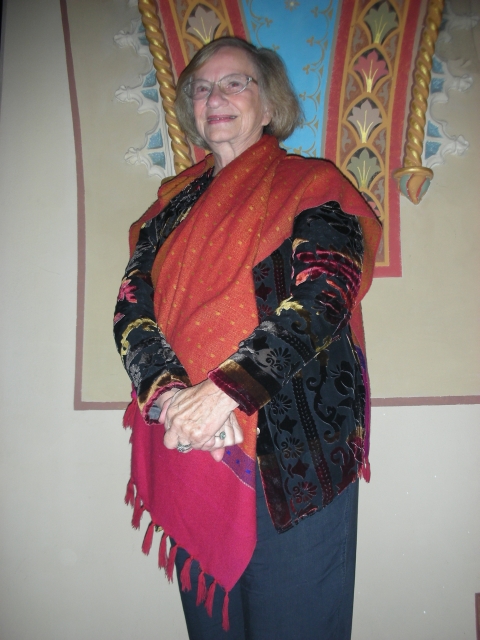
Though all these people are clearly cool writers, the prize for Coolest Writer definitely has to go to Danuta. There is no doubt about that.

It's not because she translated the coolest Polish writer ever into English: Witold Gombrowicz is sometimes referred to as the Polish James Joyce (the Poles, I believe, refer to him just by him name, and refer to James Joyce as the Polish Gombrowicz). Danuta won a prize for her translation of his classic "Ferdydurke" and is going on to translate his other two classics, "Cosmos" and "Pornographia."

Nor is it because she is dedicated to her art of translation. It took her something like seven years to translate Ferdydurke, especially because she had to invent so much of the English to go with invented Polish. Professionally, she is a psychologist (retired),and gets paid a pittance for translating – clearly this is a labor of love.

Nor is it because she has had such an interesting life. I won't reveal how old she is, but she was born in Poland and remembers fleeing the Nazis. Then came England for a while, and now she lives in (near, actually) Boston.

Nor is it because she also writes short stories on the side, two of which I am presenting here:

An Onion

Gray stockings were her favorite. They went well with all her dresses and set off their color to advantage. Red, blue, navy, coral, green. No matter which dress she wore, she knew all would be well, but especially well if the color of her dress was indigo. This carried her with gusto everywhere. But where was everywhere?
Everywhere was inner sanctum, everywhere was outer sanctum. It was the green underleaves of precaution, it was the overleaf of jeopardy. Everywhere was everytime, and everytime was everywhere. It would be in the heel of her stocking, once a hole appeared in it. Then the bald onion of her heel would take over and everywhere would be just that. The hole would take over the whole.
The onion was bitter and strong, and even policemen would cry at the sight of it. Especially one policeman, though he had even less than all the others the capacity to cry. But the sight of an onion in Amanda’s gray stocking, in the inner and outer sanctum, under and over the leaf of everywhere, was more than he could bear. He relinquished the badge of valor that he had won conditionally and reservedly, upon approval, and followed her to the end of her tether. That was somewhere he had never been before. It was at the end of a green lane where preputias were blooming, and where the scent of heretofore was bitter and sweet and obviated the scent of the onion of Amanda’s heel. Here joy rested with sadness and blended with the indigo blue of her dress.

Our Rudolph

The big sister was like a huge rambling house, a mushroom, a fungus, a toad sitting above the three little ones. She was watching over them through her windows, winking at them with her lights. Her drooping breasts were like the sagging balconies of a genteel, old house. The three little sisters were perky enough, though low to the ground. They were looking up at her and she was looking down and, at first, there was nothing oppressive about it, nothing at all. But gradually, little by little and in barely perceptible smudges, grubs and grime encroached on their minds, the way fungus spreads and engulfs. Through leaves eaten by vermin, through gaps in the everlasting sky, mortification and horror seeped into the soul-marrow of the three little ones.
It all began at the one indelible moment when the crest of the bounding sky fell to the pit of eternal abyss. When the abbots and prelates met their congregation as one eye to another and cast the great We over the little thou. When the big sister sat in the pew with her little sisters and held them by their not yet fully developed, puny wrists. The wrists squirmed and wriggled, but the vice tightened.
Outside the church the sun was shining. A breeze, now gentle, now brisk and rough, was sweeping leaves over the steps to the entrance. A man was about to enter the church when he was grabbed from behind, his arms held tight behind his back, and pushed into an incredibly beautiful car, white and shiny, golden trim all around. He was shoved into the back seat and driven off. The abbots and prelates were to catch up with the kidnappers later, such was the arrangement.
The man’s name was Rudolph. He was to have joined his sisters in the church just at the moment when the abbots and prelates were to meet the congregations as one eye meets another. However, he was delayed by a new and unexpected turn in the road, which took him through hollycobbles and hillycocks, pireas and putreas where the devilscums lived. Finally, when he arrived at the church, it was great, he thought, to have arrived there at all. He was to deliver his little sisters from their big sister and from the abbots and prelates. But the devilscums had signaled to each other in the field of the pireas, and the next rudolph that passed by was to be their victim.
The prelates had finished their sermon, the abbots had placed the last dot after We. All decked in their incredibly beautiful vestments, satin-white and embroidered in gold, they were about to leave the church. They were heading for the back door, better known as the vestry, when the three little sisters shouted:
“Where is our Rudolph?!” they shouted.
Their wrists half-worn through by their wiggling and squirming, they wanted to know where their Rudolph was. Their big sister, her breasts hanging like baboons on a sagging branch said oh shut up and behave, or I’ll knock your blocks off. Their wrists worn thin, they were white with fear and wanted to know where their Rudolph was.
“Ah, la-di-da!” sang the abbots and prelates running out through the vestry, for they were in a hurry to join the devilscums, as had been arranged. They hopped into the equally beautiful golden-trimmed white cars and drove off with a whiz. Through hollycobbles and hillycocks and beyond the field of pireas they reached the wide open country of putres and decayas, where the devilscums lived. There on the ground, stretched into a square like a painter’s canvas, lay our Rudolph. They were serving Ginseng tea that he was hardly able to drink because his head was flat on the ground. They placed a piece of yummy bread in his hand that he was not able to eat because his arms were held stretched out. And so they tempted and teased him till he confessed: yes, those were his little sisters, yes, he was going to rescue them from the grip of their big sister, and yes, he was going to prevent them from coming eye to eye with those scoundrels — the abbots and prelates. And why, pray, was he going to do all that? Because, pray, he scoffed back at them, because he was going to save them from oppression and humiliation, from frustration, degradation and mortification, and from the la-di-da and from the I’ll knock your blocks off in answer to their little questions. At which point the devilscums shoved a painter’s stretcher down his throat and another up his ass, and that was the end of our Rudolph.
The big sister is like a huge house rambling above her three little sisters. She is watching over them through her windows, winking at them with her lights. All is genteel again, and there is nothing oppressive about it, nothing at all.


Nor is it because Danuta has remained young.

There is nothing dusty, cobwebby, conservative, easily shocked or in anyway …old about her. This is the kind of person I want to be when I get older. But it's not because of that, either.

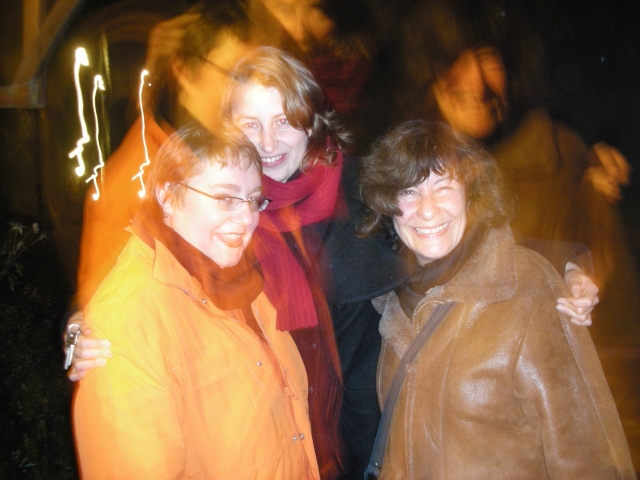
No, she wins the grand prize because of the tattoo.

Look at it. You remember your mother telling you never to get a tattoo because it will embarrass you later in life and you won’t be able to take it off? This tattoo – I think they call it "tribal" - is in a very modern style. It is not a folly of her youth:

Thursday, November 30, 2006

Day #75: Thursday, Nov. 30: Time To Go

It's been 75 great days in Cracow. The Poles are great people. Cracow is a great city. The denizens of the Villa Decius Guesthouse were great writers, interesting people and I hope they will remain good friends.

A few of us who were left - Erica, Tanja, Katja and her friend Katja - sat around in the Gosopda restaurant last night and discussed whether we had accomplished what we had set out to acccomplish.

The goals were wildly different: Erica finished her book but did not "finish" learning Polish; Katja did some writing and did not "find herself," but she almost did. Tanja just plain didn't want to leave.


And me? Did I accomplish anything here? I didn't finish my great renaissance novel, but I did sold two books, one of which is a comic novel, I finished the website and there was something else strange that happened. Spending 75 days surrounded by writers who take their work but not necessarily themselves very seriously, I began looking at myself a little bit differently too. Can't really say how. And no one else noticed it, I think, but I did.

Late last night around 1 a.m., I put on my headphones, found Bob Dylan's latest record on my iPod, cranked it up and wandered outside into the damp, deserted dark. I danced. Through the parking lot, around the Villa, into the park and around it, through the sculpture garden and back home. Don't know why i did that. Haven't ever done it before and will never did it again. But let me tell you: If you've never played air guitar in the dark in the fog in the middle of the night alone in the park behind the Villa Decius, you haven't lived.

Time to go.

Wednesday, November 29, 2006

Day #74: Wednesday, Nov. 29: Guesthouse Emptying Out For Good

The house is almost empty. There have been many goodbyes, mostly associated with too much vodka much too late at night. There have been many heartfelt promises to keep in touch. Now it's time for me to go too.

What have I learned about Poland?

They use very thin napkins. Their sheets do not cover the entire mattress. The poles are great cooks.

Do I have any regrets?

Yes. That I did not buy a fly strip in the first week.

Has this experience changed me?

Let me see... When I arrived, I was struggling to turn my career from journalism toward book writing and unsure of myself in terms of whether I was really a book writer. In the Villa Decius Guesthouse, something happened. And it happened because of the other writers in the house. They took it for granted that I was a writer, like they took for granted that they were. None of us were all that successful, few of us were very established, we all had different opinions and different ways of looking at writing, but everyone felt like writers and acted like writers.

It may sound strange for a man whose been a journalist for 15 years and has already published two books, but until now I felt like a wanna-be. When I came out of the Guesthouse, I felt like a writer.

Fellow Writers of the Villa Decius, if you're listening: I owe that to you.

Tuesday, November 28, 2006

Day #73: Tuesday, Nov. 28: I Miss Someone

Sunday Morning. A little hung-over, a little lonely. Listening to Hank Williams again.
He's telling me: You've been away from home for quite a while now.

I have been, Hank. But I have one or two things more to do here.

How long is too long? When is it time to hit the road back home?

Soon, I tell him. Very soon.

Monday, November 27, 2006

Day #72: Monday, Nov. 27: The Gospoda


The Gospoda makes a great plate of pirogis and as been a great place to hang-out. On one of our last nights, we found out that the owner, to whom we had been speaking mainly English the whole time, speaks nearly perfect German and has spent time in Germany with her husband, a physicist who worked at the Hahn-Meitner Institute in Berlin.

Sunday, November 26, 2006

Day #71: Sunday, Nov. 26: The Last Readings

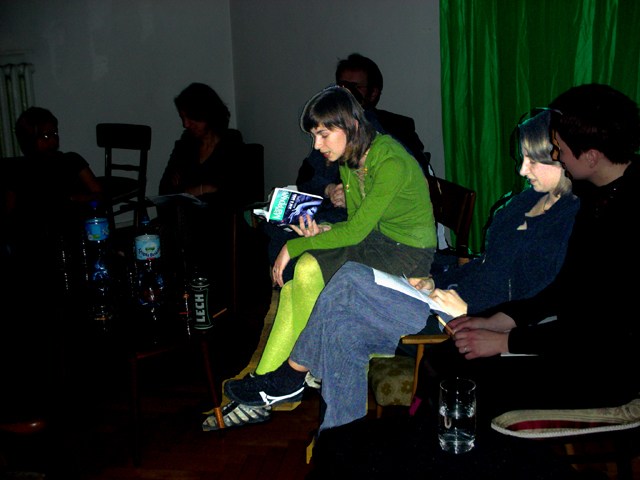
Oh yes, and I almost forgot. The reason we were in Warsaw was because Tanja and Katja were invited to a multi-lingual reading alongside a couple of more established Warsaw authors. though I only stood a few lines, it seemed to me that Katja and Tanja stood their own pretty well.

Then we hit the bars.


The very next day, Nicolai recieved us in the Villa for his reading.
He too was paired with a local writer.

And again, I have to say: Not only was he miraculously somehow sober and capable of performing, he wrote rings around the guy. Ah heck, I'm just plain proud of my Decius Gang.

Saturday, November 25, 2006

Day #70: Saturday, Nov. 25: Ugly and Beautiful, Palms and Monsters


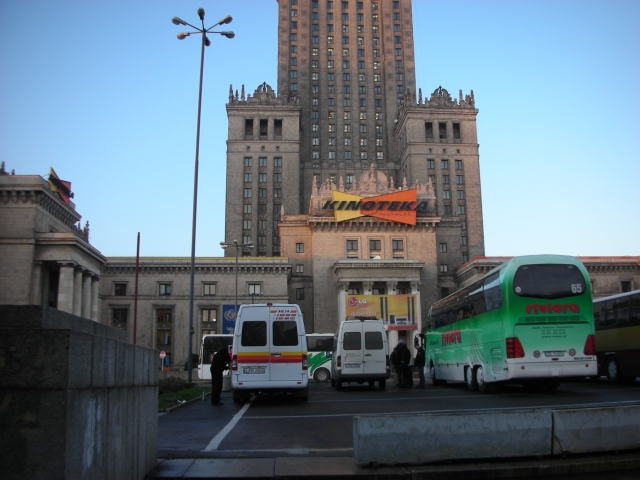
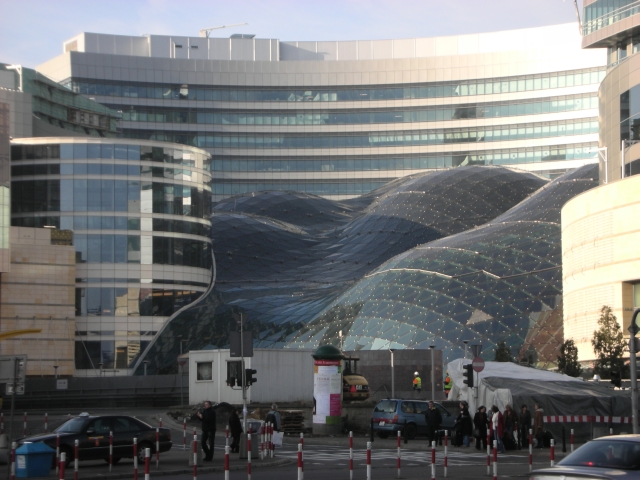
I had forgotten what a small town Krakow is until we took a weekend tour to Warsaw.

Big, bustling, dirty, raw and alive, Warsaw is a real city.

But it's not a faceless moloch. Alongside its historical and Soviet architecture, it has real surprises to offer.

In the middle of town there is a big intersection with a roundabout surrounded by massive flat-faced buildings that reminded me of the airy, generous squares on the Riviera. And lo and behold: In the middle of it was a palm tree.

In Warsaw! I asked our Villa-babysitter Renate how they managed to keep the thing alive in the cold and she said: "It's plastic."

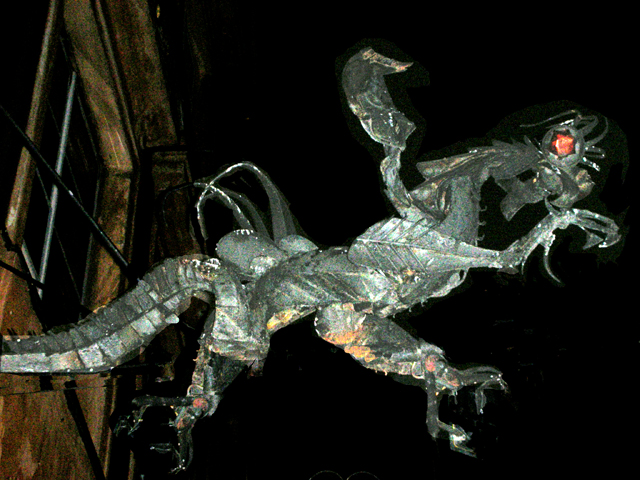
Like Krakow, Warsaw also has a monster legend: A basilisk - a poisonous half-cockeral, half-snake with wings that can kill you by looking at you - haunted the cellars, streets and air of Warsaw until a hero (again, an artisan, I believe) killed it by tricking it to look into a mirror. But it is rumored to still be hiding out in the cellars here somewhere.
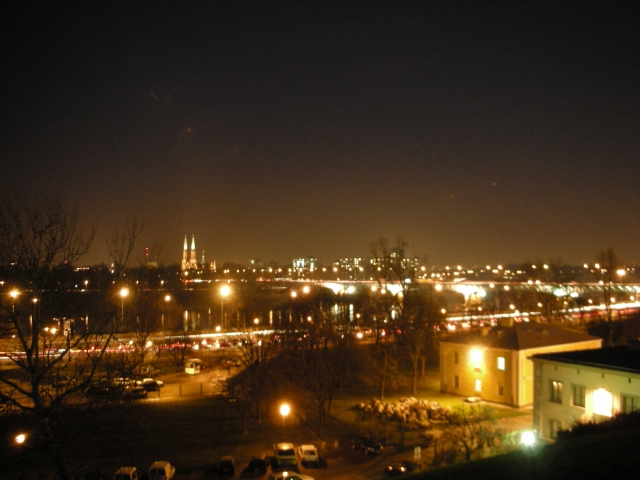
As we wandered through the rebuilt old town into the dark, more and more I had the feeling that we were being followed, but whenever I turned around, I saw nothing suspicious.

But the feeling grew finally I heard a fluttering, looked up and got this photo of the basilisk flying out of a window into the night. It's true, then: The basilisk lives!

Friday, November 24, 2006

Day #69: Friday, Nov. 24: Content vs. Form


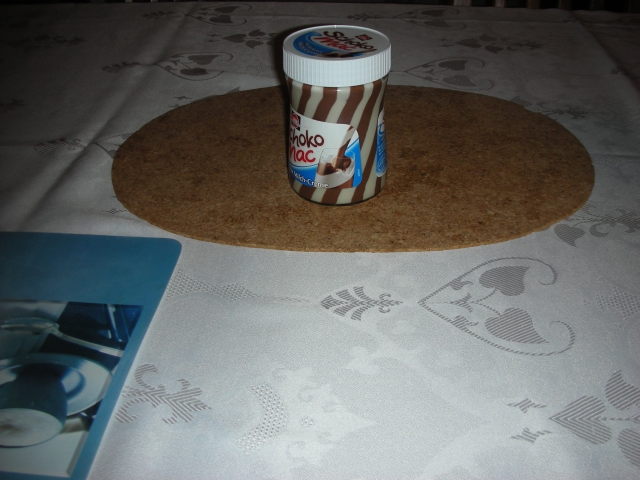
There it was: The glass of Nutella, just sitting there on the breakfast table.

Nutella is a creamy, chocolatey, nutty breakfast spread that is very popular in Germany and is becoming more and more popular in other parts of the world as well. It comes in a hundred different brands and flavors (This particular jar is a different brand and thus not officially Nutella, which is a trade-marked brand, but still I call it that.)

Seeing it there on the table was a clear sign that were would soon be a fight. A fight about aesthetics. That’s how things happen in these literary houses: All it takes is one little thing like a glass of Nutella to set us off and we’re at each other’s throats. This is how it happened:

Erica: Who eats Nutella around here? Isn’t that something that kids eat?

Eric: Oh my God, you just made me realize that there is more meaning in that glass of Nutella than there will ever be in a beautiful poem about a tree.

Katja: You filthy bastard, there you go disparaging the beauty of nature again, if you don’t take it back I’m going to pour this scalding coffee right in your face!

Kobus: You dirty dog! I’ve had enough of your disrespect for poetry. If you open your mouth one more time I’m going to ram this kitchen knife right into your gut!

Eric: Just you try it, you literary wimps! I’ll show you that a glass of Nutella has more meaning than a whole book of poetry! Erica would never walk through the park and say something like that about a tree: “Oh, that kind of tree is for kids.” In the Middle Ages they did, of course: Trees, birds, weather all had meaning, a crane was a symbol for Jesus, everything had meaning, but today it’s no longer the case. We see the beauty of nature and we feel transcended, closer to God perhaps, but there is very little real meaning in it.

This glass of Nutella on the other hand is full of meaning. It means childhood for most Germans, and because of that to see someone eating it makes him or her appear to be endearingly nostalgic for his/her childhood. For me, it says something specifically about German women: I have never met a German woman who doesn’t love Nutella despite all talk of diets and will secretly eat it with a spoon when no one is looking.

And there’s more: Nutella is a huge success in Germany and I think of it as a German food, but I believe – correct me if I’m wrong – that it was an Italian invention that didn’t quite work in Italy but became a big hit when exported to Germany. That’s a little piece of ironic globalism right there, and it tells you a lot about Europe, about the relationship between Germany and Italy, and about the German perspective on their own live and environment (Germans complain a lot about Americanization and hamburgers and Hollywood influencing their culture, but not many know that Nutella is from Italy).

So all this meaning is in that glass of Nutella. You can’t say that about any of the beautiful trees in the park, though you can devise a thousand ways to say the same thing over and over again: That a tree is beautiful. In fact, I would go one step further and say that glass of Nutella is of much higher cultural value to Germany than about 80% of all poems written in German.

Next time you’re in a non-German country, like, say, Poland, try this experiment: Go to a café and talk to a table with three or fours Poles sitting at it. Ask them: “Can you tell me who Lessing was? Who Heine was? What is ‘Der Mann ohne Eigenschaften’?” Then ask: “Can you tell me what a Mercedes is?” Clearly, products are just as important to German culture as “culture” is, in many cases more important.

Of course, the whole point of writing poems about a tree is that you can use the tree to create an analogy to some part of your own soul. You can’t do that with a glass of Nutella. It is so fraught with meaning of its own that it overpowers the poet and defeats him entirely.

Kobus: That does it! Take this, you swine! Aaaargh!

That’s when things really heated up.

Thursday, November 23, 2006

Day #68: Thursday, Nov. 23: The Truth About Litfaßsäulen


You know the Litfaßsäule, those pillar plastered with ads that stand around on random sidewalks all over Europe, from "The Third Man," of course. And if you've seen that movie, you've certainly wondered if they are hollow inside. Well, now you know the truth about what – and who is inside them.

Tuesday, November 21, 2006

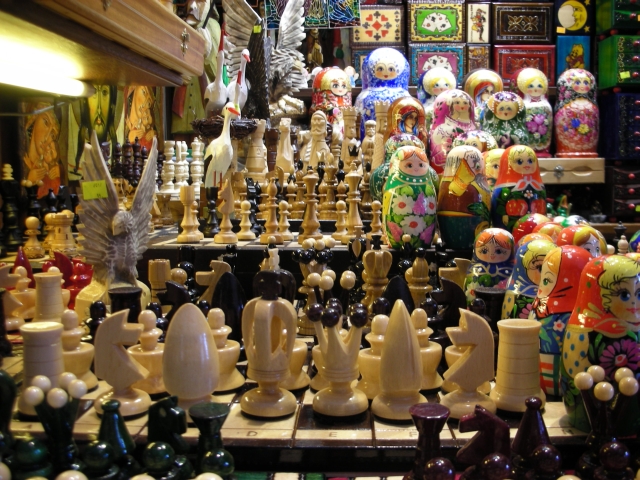
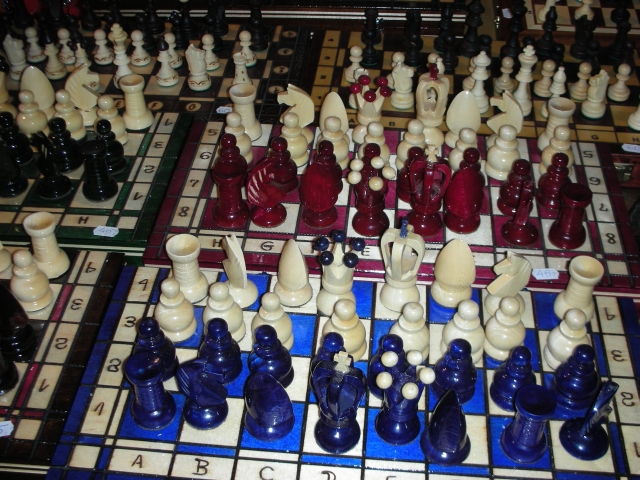
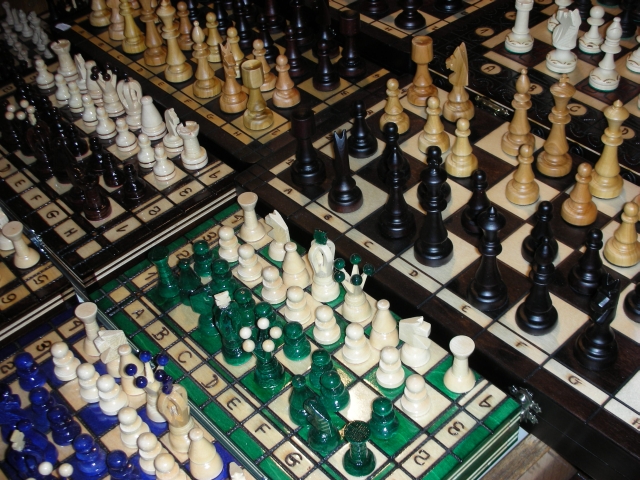
Day #66: Tuesday, Nov. 21: The Stuff of Krakow Part 2

I loved these chess-stuff photos so much I couldn't decide which ones to leave out, so I didn't.